Stones in the landscape Castles & Map

Two castles in the Eisch valley, and a scattering of houses across four countries.

Click any marker

The places, on the map

Mosan origins Grand Duchy of Luxembourg The old Duchy, Belgian since 1839 Elsewhere in Europe

Every castle, forge and seat the family has held, from the Meuse to Saxony.

Ansembourg

The two castles

They stand a kilometre apart in the Eisch valley at Tuntange — the fortress on the rock, and the country house in the valley below.

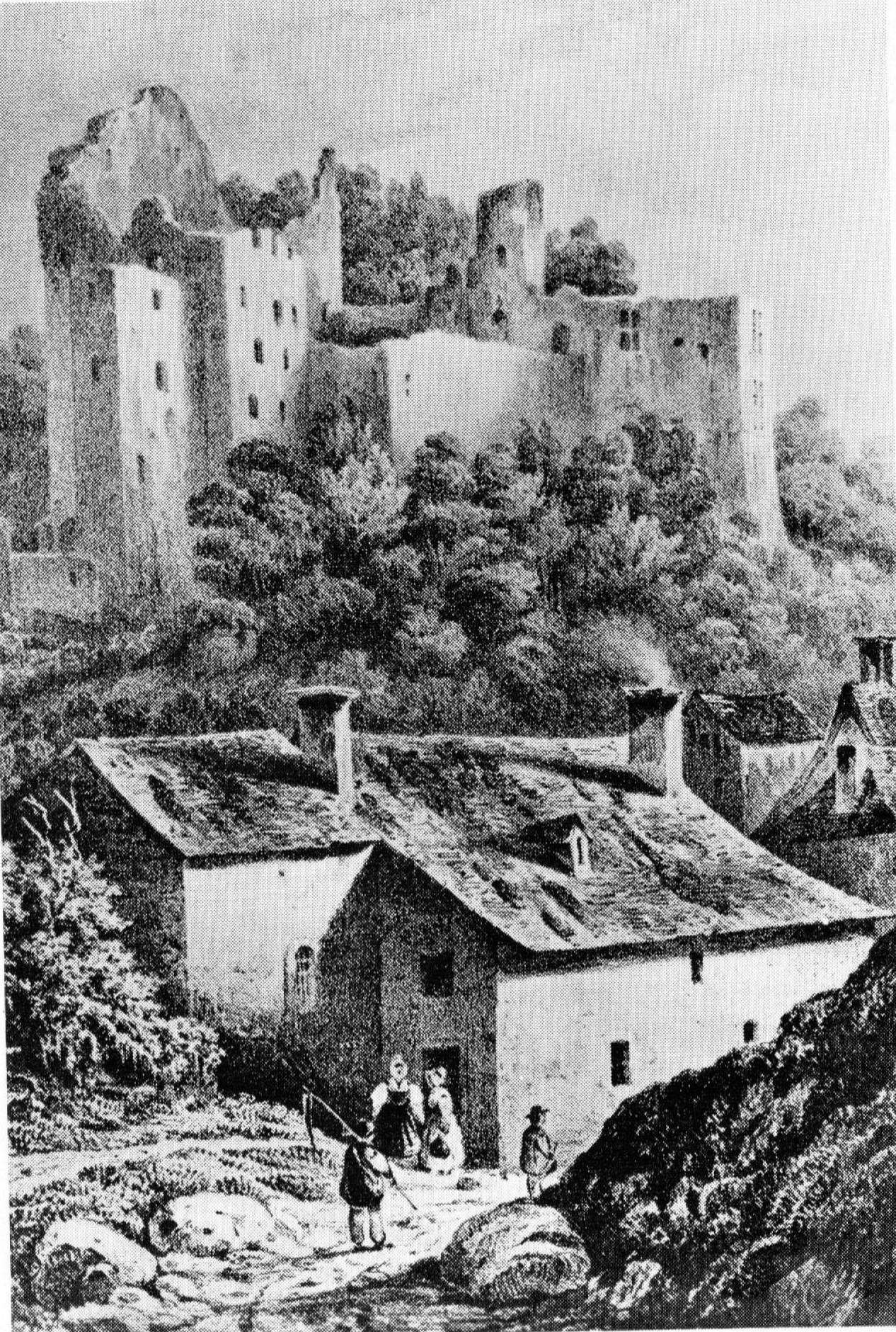
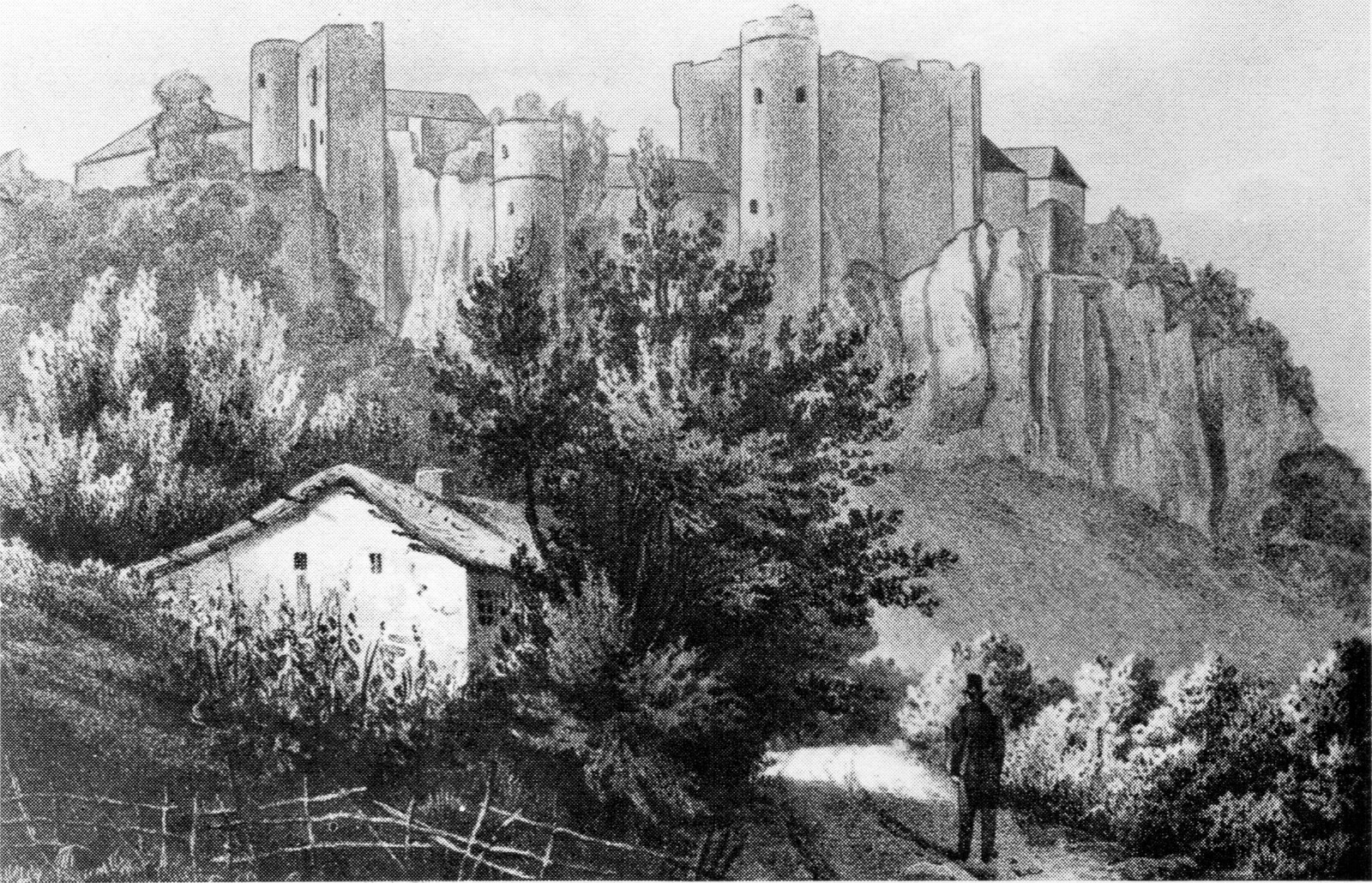
The Old Castle in ruin
Reproduced from Le Parchemin, 1983 — the family history written by a member of the family

first recorded 1135

The Old Castle

The medieval fortress on its rock above the village — the eagle's nest, as it has long been called — and the seat of the older lords of Ansembourg until 1446. It stood empty for some three hundred years. Restored by the family in our own time and reopened in 2009 as Le Temps d'Or — for fourteen years among the highest-rated hotels in Luxembourg.
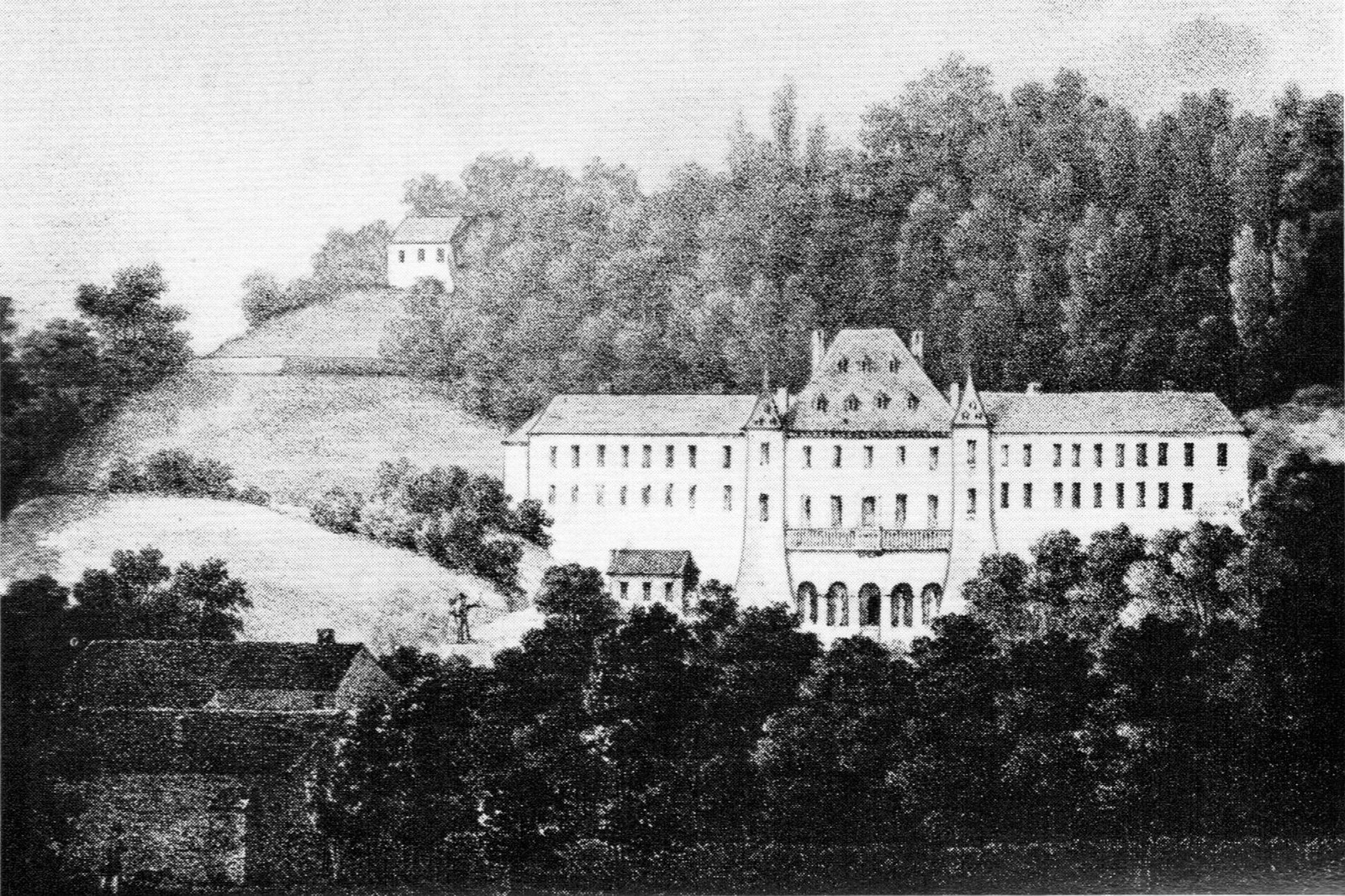
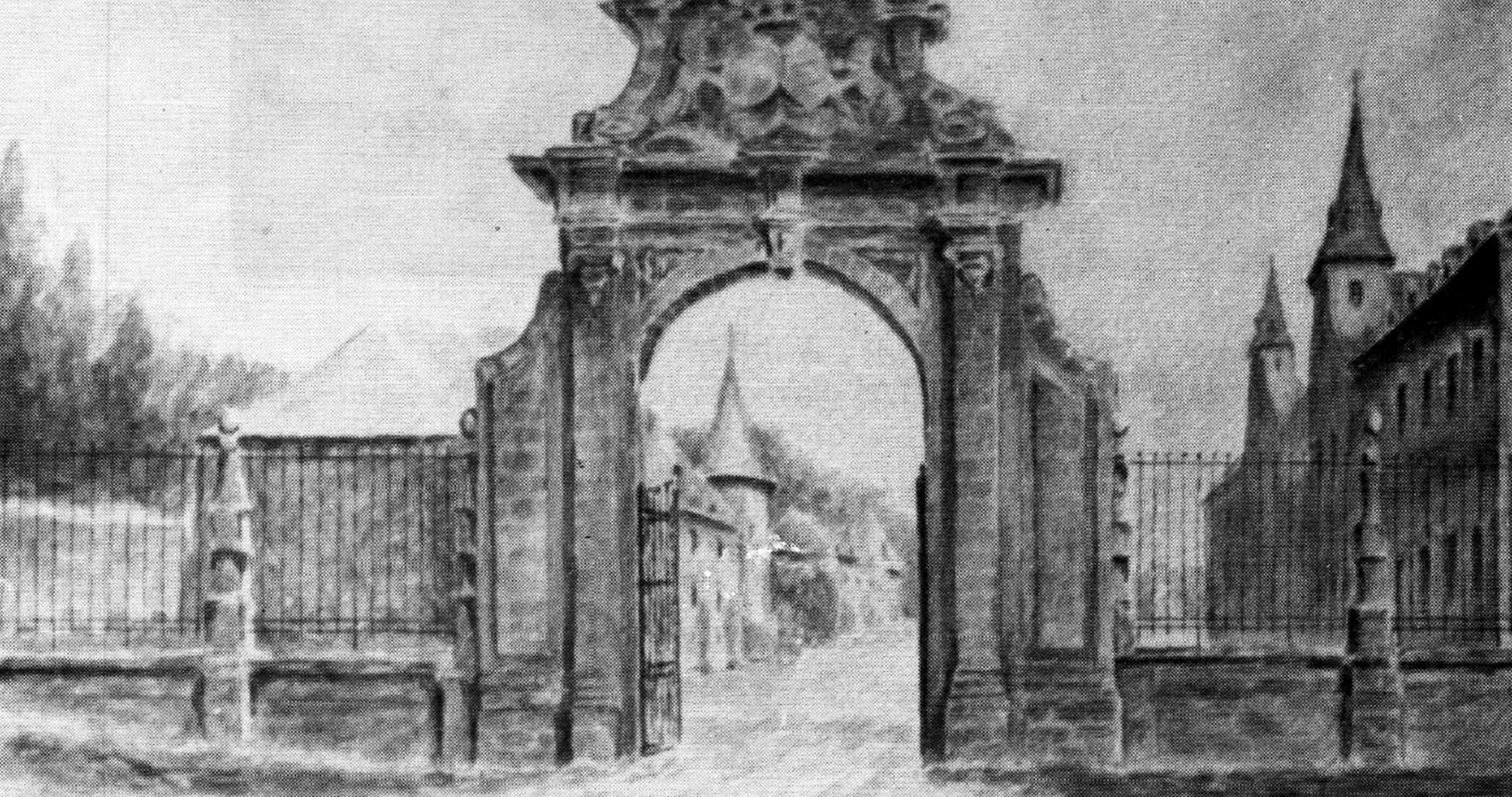
The gardens of the château d’Ansembourg — watercolour by Hermanus, 1913
Reproduced from Le Parchemin, 1983 — the family history written by a member of the family

built 1639–1647

The Grand Château

Begun by Thomas Bidart as a Mosan country house and transformed in the eighteenth century by Count Lambert — the long wings, the monumental portal of 1740, the terraced gardens, the Italianate stairs, and the stucco panels of the Moretti brothers.

In the Grand Duchy

The other Luxembourg castles

With the two at Ansembourg, eight castles of the Grand Duchy stood in the family's hands — two of them built by the family itself.

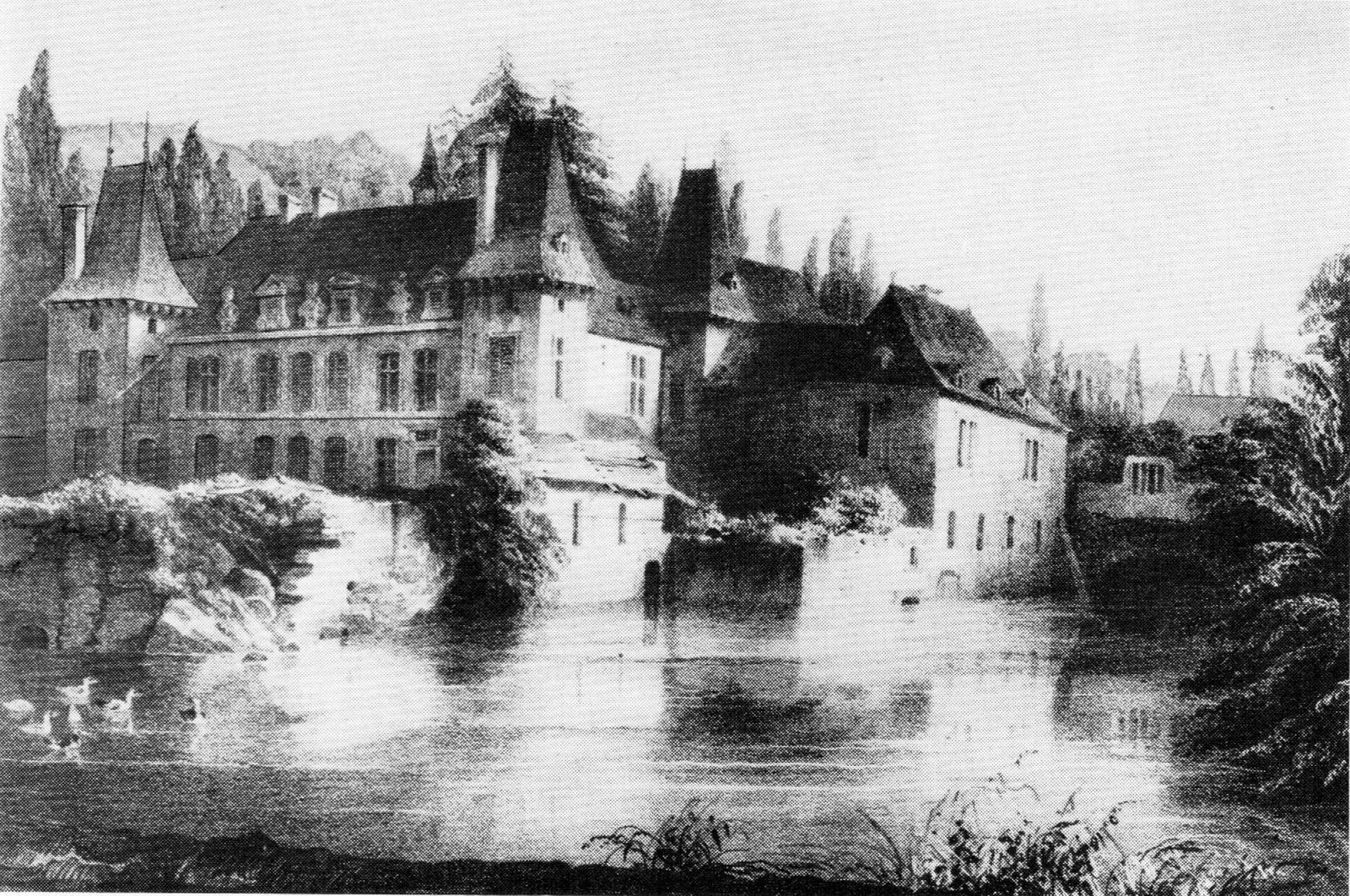
The old château of Dommeldange, since demolished — lithograph by N. Liez, from the Voyage pittoresque dans le Grand-Duché de Luxembourg, 1834
Reproduced from Le Parchemin, 1983 — the family history written by a member of the family

c. 1654 · built by the family

Dommeldange

Thomas I Marchant bought the forges, ponds and blast furnace on 26 August 1654 and built his house beside them — the second of the two the family raised itself. The forges were sold to the Collarts in 1778, and in 1869 Charles Collart razed the old château to put up the present one in its place. That later building is today the embassy of the People's Republic of China. The house the family built survives only in this lithograph.

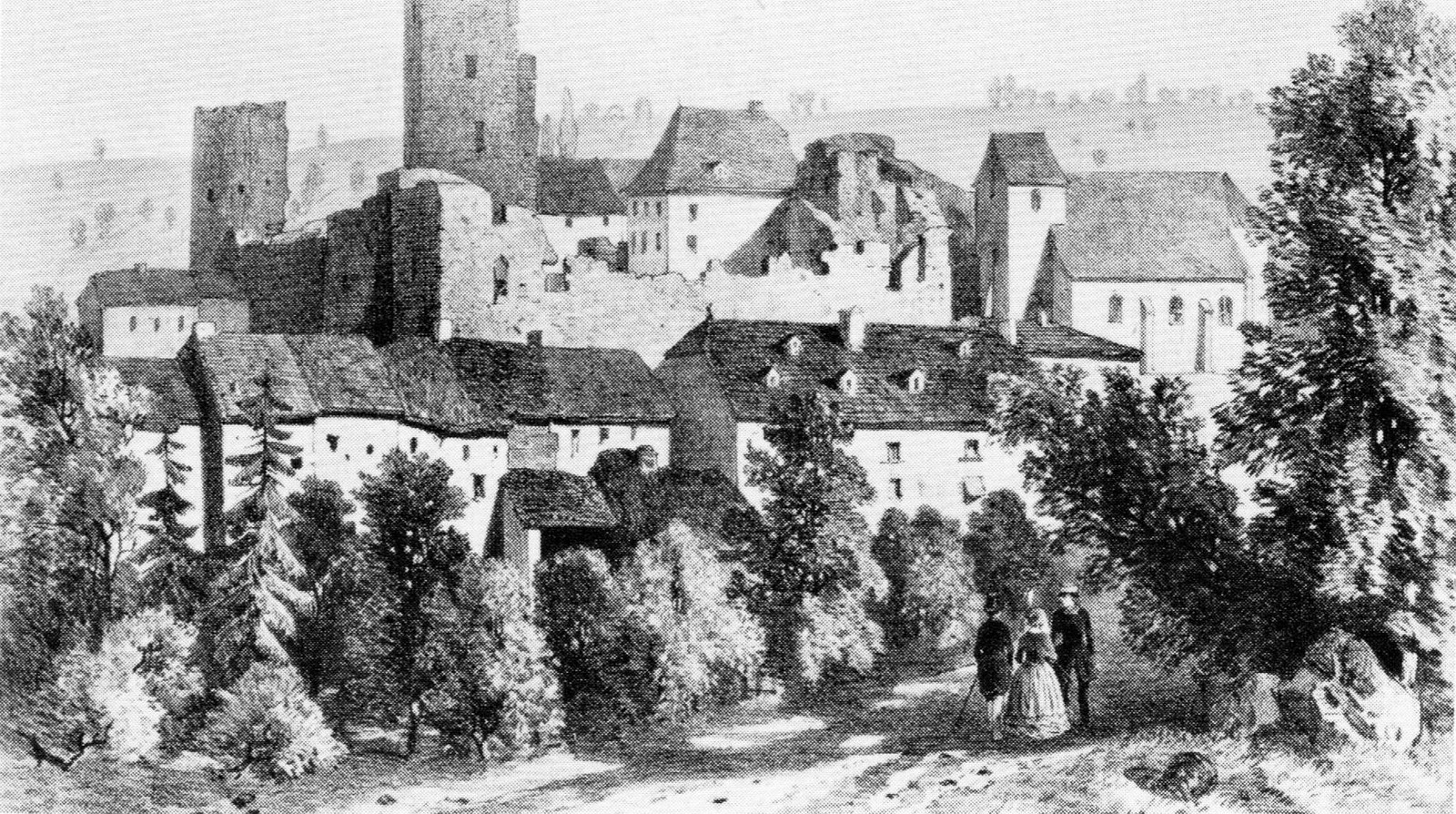
Engraving of Septfontaines castle

Septfontaines (Simmern) — Engraving from H. Kuhn & J. P. Koltz, Burgen und Schlösser in Lothringen und Luxemburg, 1964

medieval

Septfontaines

One of the seven castles of the Eisch valley. Its fourteenth-century parish church still preserves the family memorials.

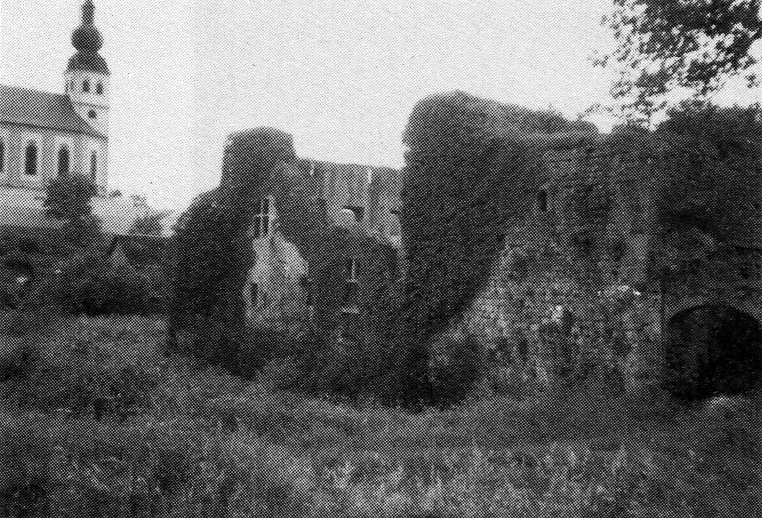
The ruin of Koerich castle

Koerich, with the church of Saint Martin beside it
Reproduced from Le Parchemin, 1983 — the family history written by a member of the family

12th century

Koerich

A feudal keep rebuilt in the Renaissance, with the baroque church of Saint Martin beside it — once called the most beautiful church in the country.

Useldange — Engraving from H. Kuhn & J. P. Koltz, Burgen und Schlösser in Lothringen und Luxemburg, 1964

12th century

Useldange

The walled fortress on the Attert, with its keep still standing. It held five hundred French prisoners in 1637.

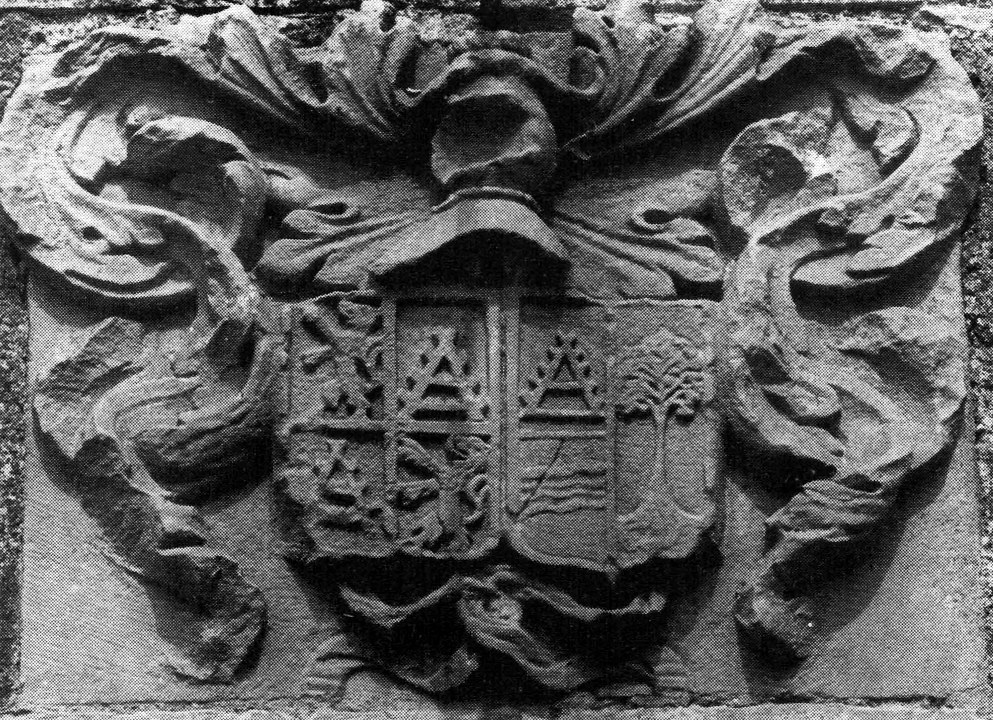
The alliance arms of Lambert de Marchant, seigneur d’Ell, 1655 — carved over the door of the château
Reproduced from Le Parchemin, 1983 — the family history written by a member of the family

acquired 1655

Ell

In the Attert valley. The earlier castle was destroyed in 1453 during the Burgundian conquest and rebuilt; the Marchant–Hermée alliance arms still stand over the entrance.

acquired 1711

Heysdorf

A great rectangular keep, nineteen metres by fourteen, standing near Luxembourg city.

Beside these stood Hollenfels, worked jointly with Thomas Bidart, and the forges that paid for all of it — La Trapperie at Habay-la-Vieille, bought in 1627, and the ironworks at Biourge, Bomal, Neupont and Simmerschmelz. These were not courtly residences. They were the working capital of a working noble house.

Seigneurial rights

Some twenty villages part of their Lordship

At its widest, in the middle of the eighteenth century, the family's seigneurial rights ran across a band of the Duchy from the Eisch and Mamer valleys to the upper Attert and out to the Moselle — Ansembourg, Bereldange, Boevange, Bour, Dommeldange, Dondelange, Ell, Greisch, Heysdorf, Hollenfels, Kahler, Koerich, Marienthal, Olm, Reckange, Roodt, Rosport, Schoenfels, Septfontaines, Tuntange, Useldange, Wormeldange and a few smaller places besides. Several more lay in the part of the old Duchy that became Belgium in 1839.

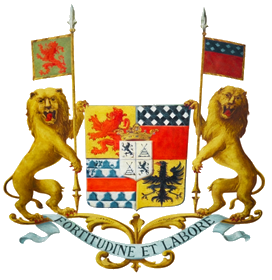
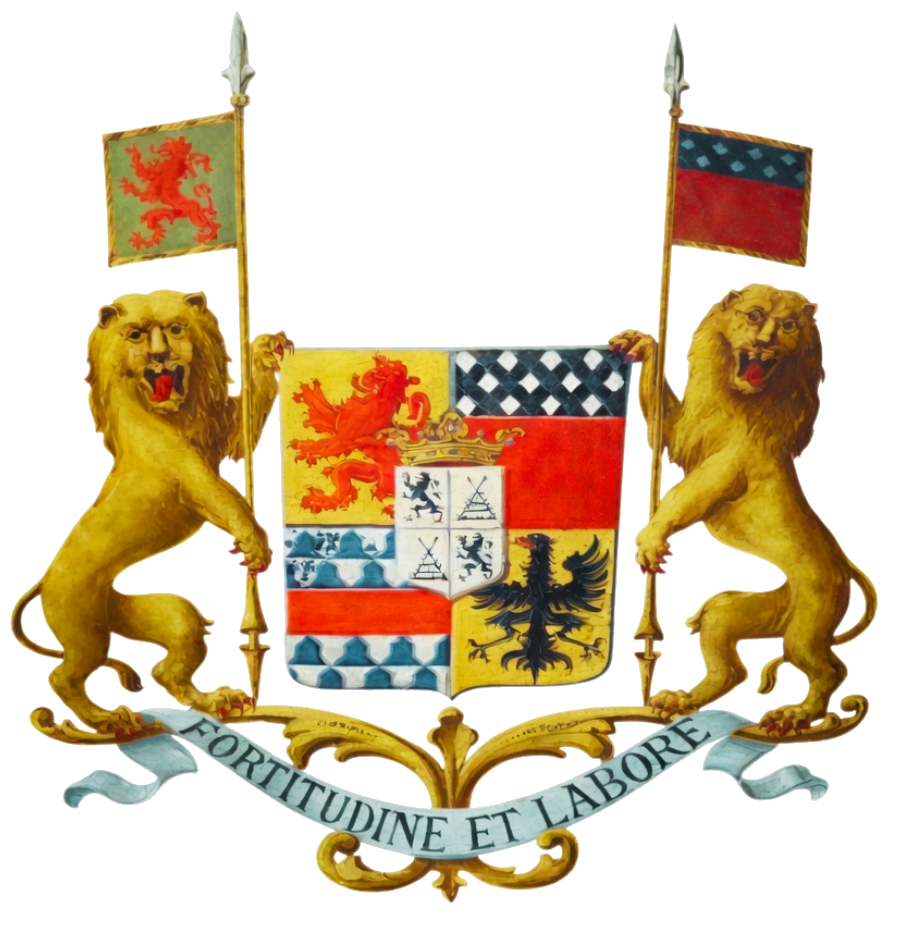
The imperial patent of 1750 names four of them — Ansembourg, Koerich, Septfontaines, Useldange — and those four are the ones carved on Count Lambert's escutcheon.

Beyond Luxembourg

Liège, Limburg, Westphalia

Marriage carried the name outward — into the Prince-Bishopric of Liège, across the Meuse into Dutch Limburg, and eastward into Germany.

1738–1741 · open to visitors

Hôtel d'Ansembourg, Liège

The family's town palace in Féronstrée, attributed to the architect Jean-Joseph Couven — sober without, sumptuous within. It survives as a museum in the Grand Curtius, and still carries the family name.

inherited 1784

Hex

The rococo estate of Prince-Bishop de Velbrück, with its Temple of Philosophy standing in the park. Inherited by Claude-Romain from his uncle and held for a hundred and sixty years.

inherited 1788

Amstenrade

The great Limburg house, rebuilt by Bartholomé Digneffe in 1781. Its eighteenth-century Chinese room, painted with palms and birds, survives.

The Limburg branch also held Neubourg, Puth, Rivieren and Roosenhof; and in Belgium the family kept Fraiture in the Liège country and Assenois in the province of Luxembourg.

The marriage of Oscar to Léonie von Wendt-Holtfeld in 1837 carried the name into Germany, where it became von Marchant und Ansembourg. The German branch held Crassenstein, Holtfeld, Horst, Borlinghausen and Hardenberg in Westphalia, and Ascherode in Saxony — where, by a strange turn, Comte Gaston reached the American lines in April 1945 at the end of his escape.

Three of the family's finest houses share an architect: Amstenrade, Fraiture and the pavilion at Hex all came from Bartholomé Digneffe and his circle, while the Liège town house is Couven's. Between them, the two great Liège architects of the century built for the same family.

← The history     Family area →