From master smiths on the banks of the Meuse to Comtes d'Ansembourg in the Grand Duchy of Luxembourg — the long arc of one family, told plainly.
The family that today carries the name d'Ansembourg has, in fact, two founding stems. Both came from the same valley — the upper Meuse, the cradle of Walloon iron — and both were ironmasters working the forges and furnaces of the Mosan basin. They arrived in the Duchy of Luxembourg within three years of each other in the 1620s, and joined a generation later by marriage. Without either stem, neither this site nor this family would exist.
The Marchants are the surname-bearing line. They appear in the records of Bouvignes-sur-Meuse, in the County of Namur, from 1431 onwards — not as knights but as master smiths and ironworkers. The family name comes from the trade. From the fifteenth century they appear as aldermen, mayors and forge-owners, working their way along the Meuse valley to Couvin and to Boussu-en-Fagne, buying the forges of the Ry de Rome in 1508.
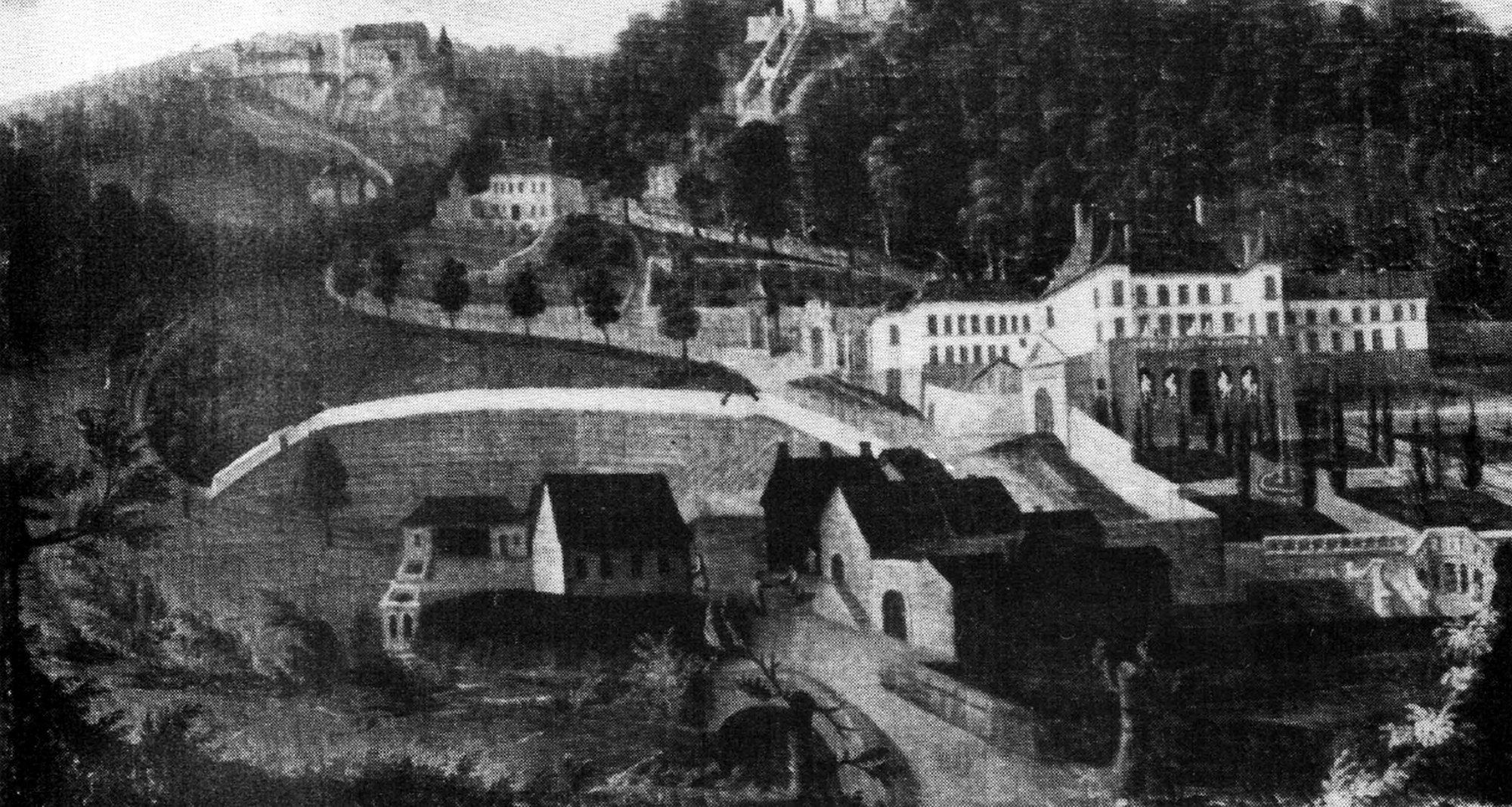
The other stem, the Bidarts, came from Dinant — just across the Meuse from Bouvignes, the same Mosan iron country. In 1624, two brothers, Thomas and Nicolas Bidart, acquired from Florent de Raville (then seigneur d'Ansembourg) the right to build a forge and furnace on the seigneurie. Thomas Bidart and his family moved into the old medieval castle of Ansembourg, and lived there from 1624 until 1628. They then moved to Hollenfels, until in 1639 they began construction of the Grand Château in the valley below — the building that, much enlarged by the Marchants in the next century, still stands.
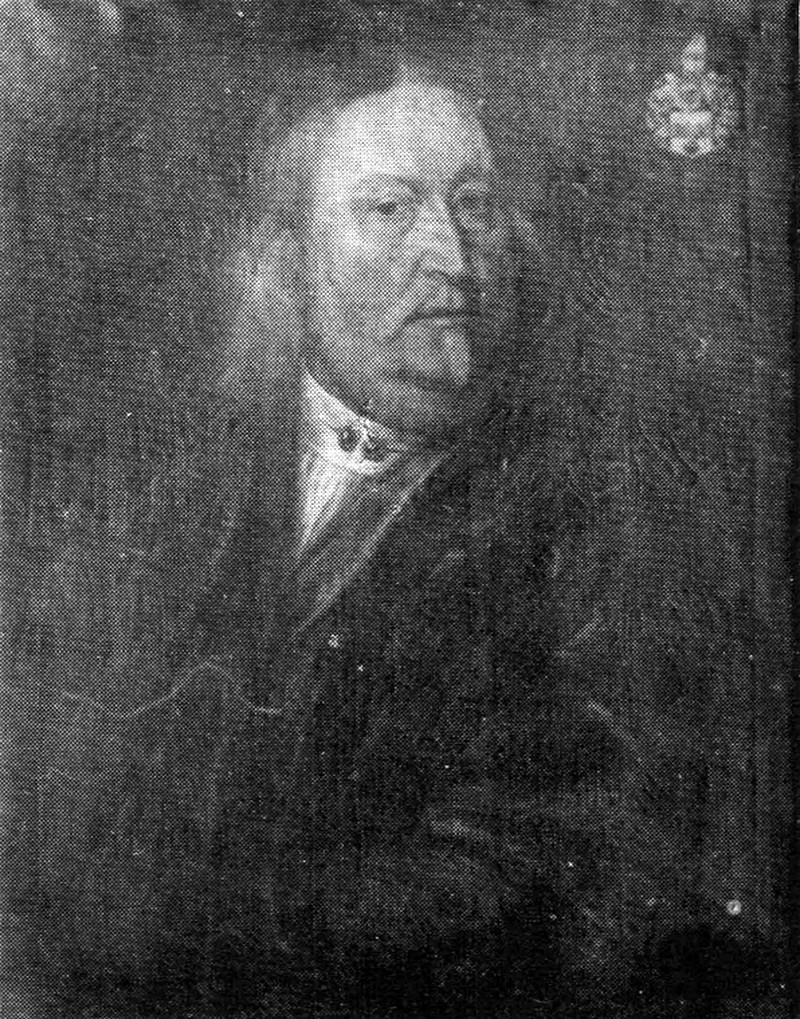
Thomas le Bidart, 1596–1670 — maître de forges d'Ansembourg, Septfontaines,
Hollenfels and the Ruwer
Family portrait. Reproduced from Le Parchemin, 1983 — the family history written by a member of the family
Thomas Bidart is in this sense the founding patriarch in Luxembourg. His daughter, Marie-Anne Bidart, would later marry François de Thomassin (who would briefly hold the forge), and his other daughter, Marguerite Bidart, would marry the eldest son of Hubert Marchant — the marriage that joined the two families. Saint Thomas the apostle remains the family's patron saint to this day, and the name Thomas recurs in every generation since.
Three years after the Bidarts, in 1627, Hubert Marchant bought the forges of La Trapperie at Habay-la-Vieille in the Duchy of Luxembourg. Hubert never saw the move bear fruit. In 1636, the plague swept through the Meuse, and at Givet the disease took Hubert, his wife and their two eldest children in a single season. One son, Thomas, survived. Through him the Marchant line continued.
An important point of context, often missed: in this period and for the next four hundred years, Namur and Luxembourg were not separate countries. Both belonged successively to the Burgundian, Habsburg and Spanish Netherlands, then to the Austrian Netherlands. When the Bidarts moved from Dinant in 1624 and the Marchants from Bouvignes in 1627, these were internal moves within a single composite state. Both stems were already, in the deep sense, of the Low Countries.
In 1652, Thomas I Marchant (1630–1681) — Hubert's surviving son — married Marguerite Bidart. With this marriage the Marchant and Bidart families joined. Thomas I was a man of the new century: industrial, patient and rich. In 1654 he bought the forges of Dommeldange just outside Luxembourg City and built himself a château beside them. In 1655 he and his father-in-law Thomas Bidart financed the first coal-fired slitting mill in the region, at the Ruwer works near Trier — a small but real first-mover moment in the industrial story of the Greater Region. He was ennobled in 1681.
What followed is the family's distinctive seventeenth-century strategy. The seigneurie of Ansembourg had been held by the Raville (von Rollingen) family before the Bidarts arrived. Those Ravilles borrowed heavily on the security of their lands; as the loans went unpaid, ownership transferred — slowly, generation by generation, by hypothec — from Raville to Bidart, and by the marriage of 1652 from Bidart into Marchant hands. The formal cession of the Ansembourg seigneurie from Raville to Bidart was completed on 10 March 1671. By 1711 the entire seigneurie was unified under Thomas II Marchant.
Ansembourg was acquired not by arms or by court favour, but by capital and patience — one cancelled debt at a time.
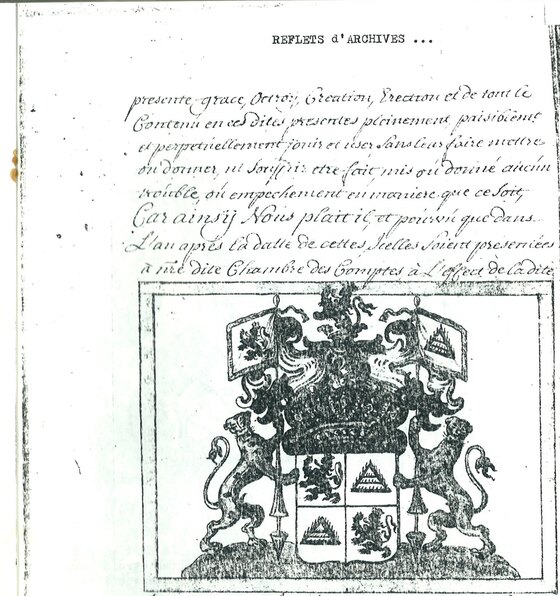
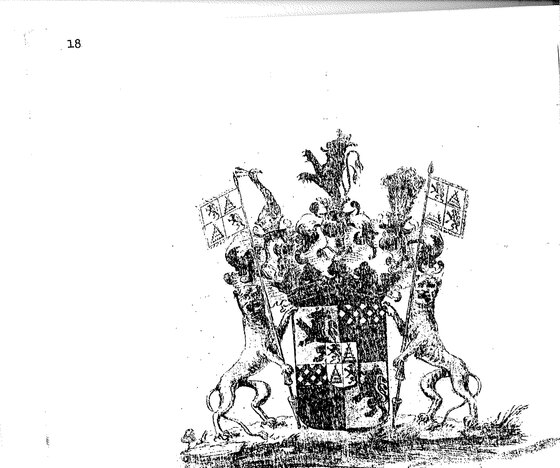
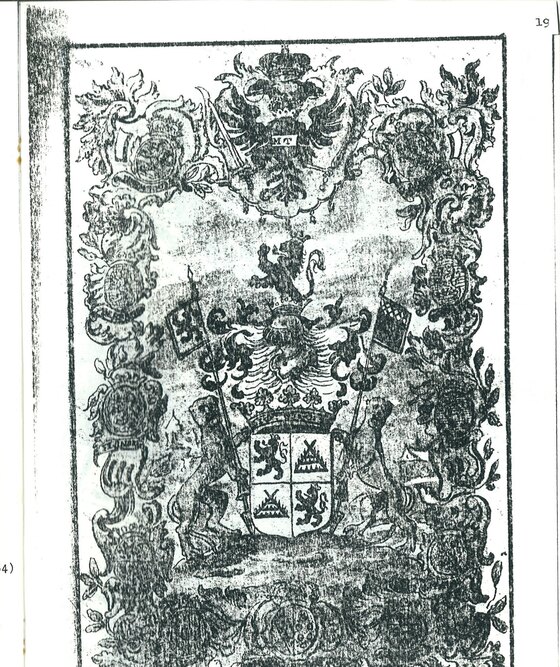
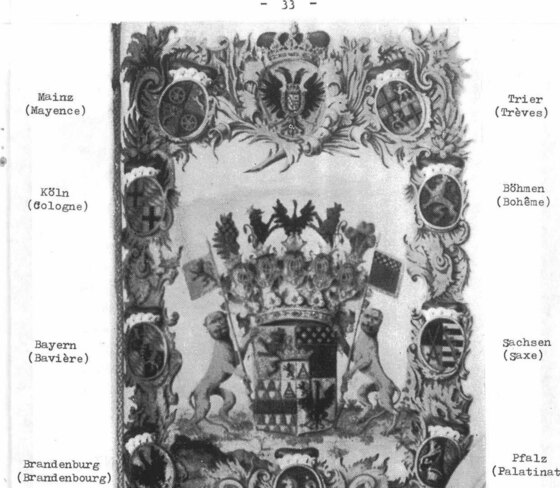
Three grants in twenty-two years, and the diplomas for all three survive.
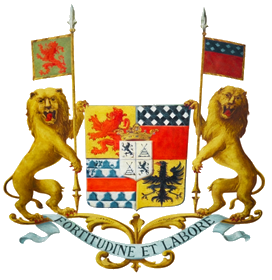
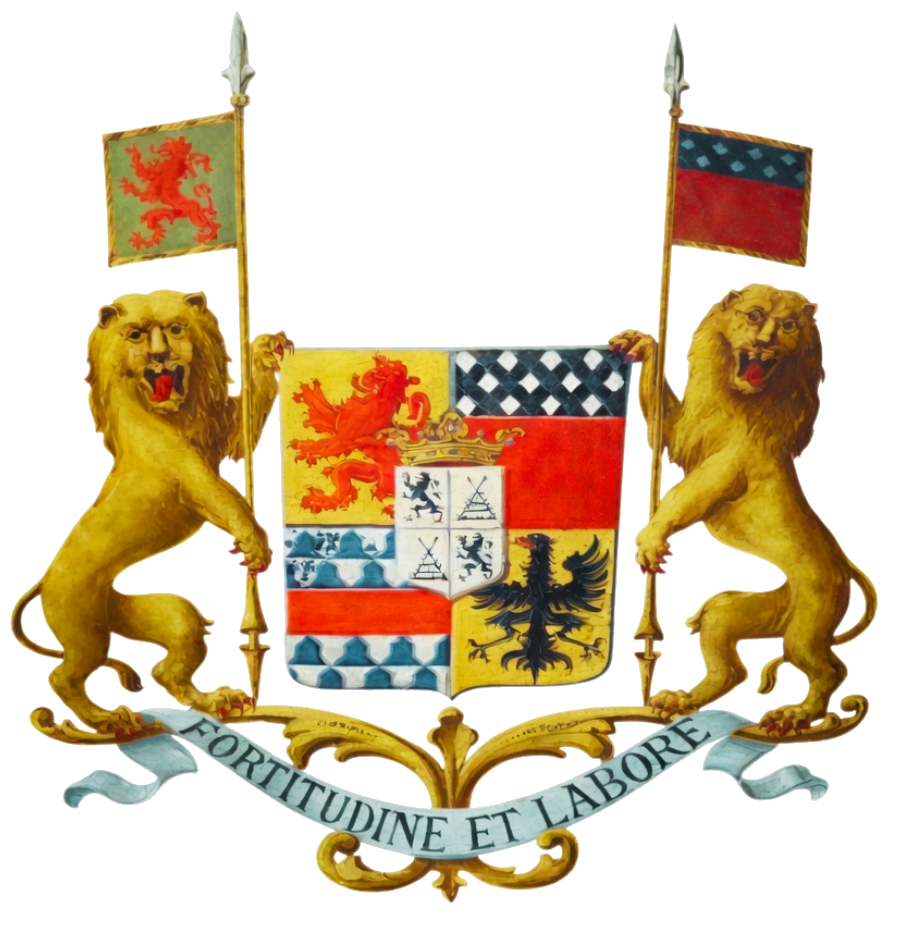
On 10 December 1728, Charles VI, sovereign of Luxembourg, raised the seigneurie of Ansembourg to a barony and made Thomas II Baron d'Ansembourg, with supports and banners to the quarters of the shield.
On 1 October 1749, Maria Theresa — Empress-Queen, and Duchess of Luxembourg in her own right — raised the barony to a county and made his son Lambert Comte d'Ansembourg, the title carrying by male primogeniture, with the arms of Koerich, the seigneurie he had lately bought, borne on the sinister side.
On 16 July 1750 at Vienna, Francis I, as Holy Roman Emperor, made him Count of the Holy Roman Empire, with the predicate of Excellency — this title carrying to every descendant, and with the full achievement: the family shield ringed by the arms of the Emperor and of the nine prince-electors.
A fourth act confirmed them. At The Hague on 16 February 1816, William I recognised the countship as hereditary in the new United Kingdom of the Netherlands, in favour of Jean-Baptiste.
It is worth pausing on the framing. The first two grants were not foreign honours awarded to Luxembourg subjects: they were Luxembourg titles, granted by Luxembourg's own sovereigns, in respect of a Luxembourg seigneurie. The country was a Duchy then — it would not become a Grand Duchy until 1815 — and the imperial grant of 1750 sat as a separate layer on top of it.
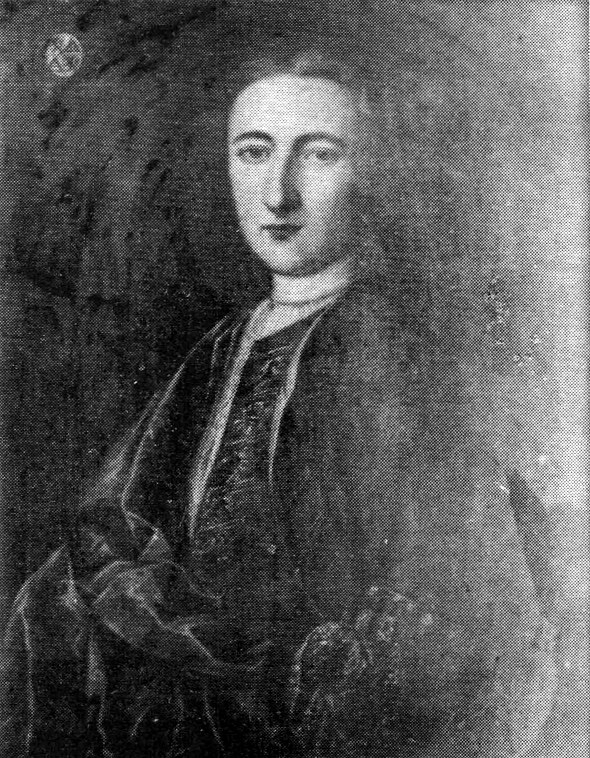
Lambert, baron then comte de Marchant et d'Ansembourg, 1706–1768, in his twentieth year
Family portrait. Reproduced from Le Parchemin, 1983 — the family history written by a member of the family
Lambert was a remarkable man. At seventeen he defended twenty-one theses in a single public disputation, a feat that drew an audience from across the Habsburg Netherlands. He was a serious naturalist and an obsessive bibliophile, building one of the most important private libraries of the region. He enlarged the Grand Château into something close to its present form, flanking it with two long wings, and raised the monumental staircase and the great gateway of the courtyard between the dovecote towers. He extended the gardens into terraces, joined by double-revolution stairs in the Italian manner and fed by fountains — the water captured from springs on the far side of the Eisch and carried across in siphon through hollowed oak hearts, bored with a red-hot iron at his own forge.
The stones say when. On the great gateway, and on the pillars of the north grille, Lambert set his alliance arms — Marchant impaled with Velbrück, for his marriage in 1734 — under the coronet of a Luxembourg baron. The quartering cannot predate the wedding, and the baron's coronet cannot postdate the countship of 1749. The gateway, the grille and the stairs were therefore built between those two dates. Le Parchemin names the three things that together raised the family among the most considerable houses of the duchy: his forges, his seigneuries, and his marriage.
He also ran through the family fortune and was placed under curatorship in 1763. Two of his sons were killed in the Silesian wars, in 1757 and 1759. After his death his great library was sold for four thousand francs, having earlier been declined at forty-six thousand from the abbey of Orval. It is the family's most baroque chapter — brilliance and ruin in the same generation.
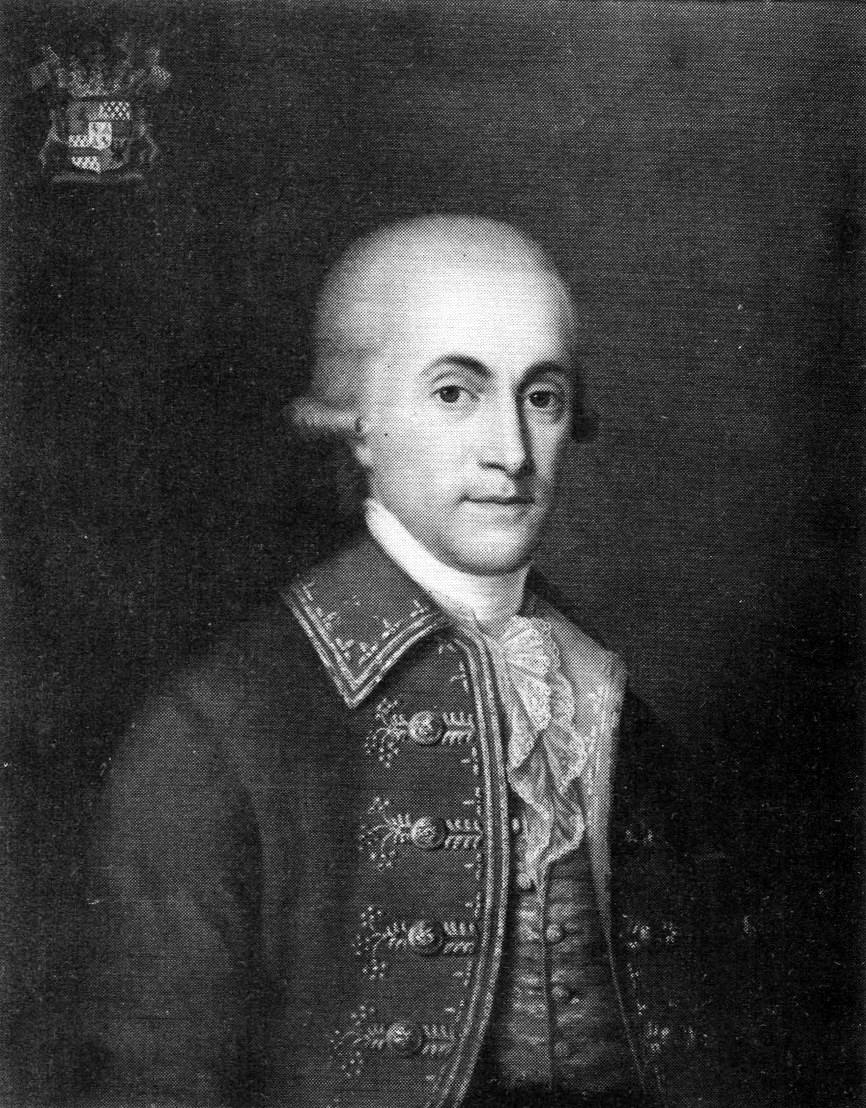
Claude-Romain, comte de Marchant et d'Ansembourg et du Saint-Empire, 1745–1798
Family portrait. Reproduced from Le Parchemin, 1983 — the family history written by a member of the family
Lambert's son Claude-Romain was page to his uncle, the Prince-Bishop François-Charles de Velbrück of Liège, from whom he inherited in 1784 the magnificent rococo estate of Hex. He restored the family finances, and, like many of his class, found himself on the wrong side of the French Revolution. He was arrested by sans-culottes and imprisoned at Fraiture, where he died unnoticed in his own cell — for two days, so the family tradition records — before anyone realised.
The next generation lived through the political reordering of Europe. Jean-Baptiste served on the provisional commission of 1814 under Wintzingerode, was elected to the Belgian National Congress in 1830, and served as senator until 1839. In that year, when the Treaty of London cut the modern border between Luxembourg and Belgium, his estates lay on the Luxembourg side. He chose Luxembourg-Dutch nationality. His three sons founded the three main branches of the family that survive today.
The senior branch, descended from William (1809–1882), chamberlain of the Grand Duke, remained at Ansembourg. The second, descended from Oscar (1811–1883), inherited Amstenrade and Neubourg in Dutch Limburg, and through Oscar's marriage to Léonie von Wendt-Holtfeld brought into the family the Westphalian estates of Crassenstein and others. The third, descended from Alfred (1813–1876), captain-commandant of the Guides, held the Hex line.
The senior line at a glance
This is not the whole family. The Marchants are documented at Bouvignes-sur-Meuse from 1431, and Le Parchemin counts seven generations before the one this tree begins with. It starts at Hubert because his was the generation that carried the name onto what is now Grand Duchy soil, and it follows the senior branch from there — each head of the family with his marriages and the children the archives record.
Drawn from the descent tables in Le Parchemin, 1983, cross-checked against the Cahiers d'Ansembourg.
The gold line is the succession — each head of the family in turn. Wives are given under the husband with their maiden names, in the form the family archives use. Children are listed where the sources record them; brothers and sisters who founded the other branches are named, but their descendants are not followed here, and the living generations are not followed beyond the present head.
He entered the Belgian diplomatic service in 1877 as honorary attaché de Légation, then had himself naturalised Luxembourgish in 1879 — a deliberate choice of country, made at thirty.
In 1892 he became Chargé d'Affaires of the Grand Duchy in Brussels, and afterwards Chambellan de Son Altesse Royale la Grande-Duchesse. He held his diplomatic functions, in the words of the record, d'une façon toute représentative — in the fullest representative manner — until his death in 1926. He had served earlier at Berlin and at Lisbon, and was chamberlain to the Queen of the Netherlands as well. He was also, for forty-five years, mayor of Tuntange.
His marriage in 1882 to Baronne Augusta d'Anethan brought a diarist into the family, and it is through her yearly notes that the household of this period can still be read: the Grand-Duke's first visit to Ansembourg in November 1891; the first visit of the future Grand-Duke Wilhelm in July 1892; the fire in the granary of the old castle in 1893; the children's whooping cough; the cures at Mondorf and in Bavaria. Augusta had married into a family whose forge at Habay-la-Vieille her own great-grandfather had bought from the Baillets a century before — she had come back to her ancestral forge by another road.
During the First World War, Amaury and his son Gaston both remained at the Luxembourg Legation in Brussels while the family sheltered at Ansembourg. He would walk from his post to lunch with his daughter Gabrielle in the rue de l'Industrie, her husband being at the Yser front. A private note recorded by the family says that when one of his children was scolded at table, Amaury did not dare intervene — but under the table, a press of his hand came affectionately to comfort the child.

He very nearly did not survive childhood. Left for a moment by his nurse in the chapel corridor at Ansembourg, he leaned out of a window and fell — not onto the stone pavement, but onto a wooden box that happened to be standing below.
He entered the Luxembourg Legation at Brussels as secretary in 1914, at twenty-three, and became Conseiller in 1922. He covered his father's post during his absences, and on Amaury's death in 1926 succeeded him in it — the same charge, from father to son.
Chambellan de Son Altesse Royale la Grande-Duchesse de Luxembourg · Ministre Plénipotentiaire honoraire · Chargé d'Affaires du Grand-Duché de Luxembourg en Belgique, 1927–1940 · sixth Comte de Marchant et d'Ansembourg et du Saint-Empire
Through the First War he worked on the Commission for Relief of Belgium alongside the Marquis de Villalobar, the Spanish ambassador who, as the family record puts it, gave himself without counting to the feeding of an occupied country. In 1922 the Marquis lunched at Ansembourg.
His own obituary is in no doubt about what he should be remembered for. Coming out of that war, and against a good deal of resistance, he carried through the Belgo-Luxembourg Economic Union — described there, with the benefit of thirty years' hindsight, as the prélude au Benelux. He was called ce grand ami de la Belgique, this great friend of Belgium.
In May 1940 the Gestapo took him, and he was held at the Grund prison in Luxembourg City, then deported to Silesia. In the closing months of the war, with the eastern front collapsing, he escaped with the Wolkenstein family, taking a horse-drawn beet-cart for what could be carried — six hundred kilometres in forty-two days, westward through the chaos. He found refuge at Schloss Ascherode with Stolberg-Stolberg cousins, descendants of his great-great-aunt Marie d'Ansembourg, and was liberated there by American troops on 10 April 1945.
He died on 9 November 1957, suddenly, struck down by an embolism between two big-game hunts.
Raymond (1897–1959) lost his hearing to meningitis as an infant and became the first pupil of Dr Decroly's lipreading method — the "R" of his 1908 paper. The family remembered him as un personnage, with friends of every age; there are photographs of him at the wheel of his first car, and of his new Buick in 1933. Victor (1898–1981) was a botanist, and travelled twice to the family's connections in Uruguay, in 1926 and again in 1927.
The medieval castle on its rock — the eagle's nest, as people have long called it — had stood empty for some three hundred years. Gaston Marie Amaury Nicolas de Marchant et d'Ansembourg (1938–2007), the present Comte's father, went back to it.
He was the son of the Chargé d'Affaires and of Marguerite Brugmann de Walzin (1905–1992), and he was not yet twenty when his father died suddenly in 1957. What he inherited, along with the name, was a building nobody had lived in since the seventeenth century.
What he took on was not decoration but a ruin: a shell of stone open to the weather, without water, without electricity, in places without a roof. He gave it forty years. Roofs were closed. Water was brought up. Power was run in. Walls that had been holding themselves up out of habit since the seventeenth century were made sound again. It was the work of a lifetime, done season by season, and largely out of public sight.
A castle abandoned for three centuries does not come back in a single gesture. It comes back because one man decides it will, and then spends the rest of his life on it.
The author of this site, Gaston-Gaétan, Comte d'Ansembourg, is the present head of the senior branch and the holder of the 1749 Luxembourg countship and the 1750 Holy Roman Empire countship. He has a son, who will succeed him.
What his father began, he finished. On the foundation of those forty years, the Old Castle was completed and opened in 2009 as Le Temps d'Or, and stood for fourteen years among the highest-rated hotels in Luxembourg — a medieval fortress brought back to life and opened to the country as a place to stay. Two generations of one family, and three hundred years of emptiness undone between them.
The titles, granted in Luxembourg, remain. The name remains. The country whose sovereigns gave the family its place — the Grand Duchy of Luxembourg — remains, simply, home.
Further reading
The most thorough single account of the lineage and the architecture of Ansembourg is the 1983 article in the Belgian heraldic and genealogical journal Le Parchemin. It is made available here as a PDF (7.2 MB) for anyone who would like to read it in full.